Home › Service Dog Training

Service Dog Training

For handlers in the San Fernando Valley who need a dog that works — trained to do specific tasks that mitigate a disability, and steady enough to do them anywhere.

Who this is for

You have a disability, and you need a working partner.

A service dog is not a comfort. It is a piece of medical equipment that breathes — individually trained to perform work or tasks directly related to your disability. That definition is the whole job, and it is what separates the dogs I train from a well-behaved pet in a vest.

Most of the people I work with come to me in one of three situations:

  • You have a promising young dog and want to owner-train it properly, with guidance.
  • You are about to pick a candidate and want help choosing before you fall in love with the wrong dog.
  • You started alone, hit a wall in public access, and need someone to untangle it.

All three are workable. The second one saves the most money.

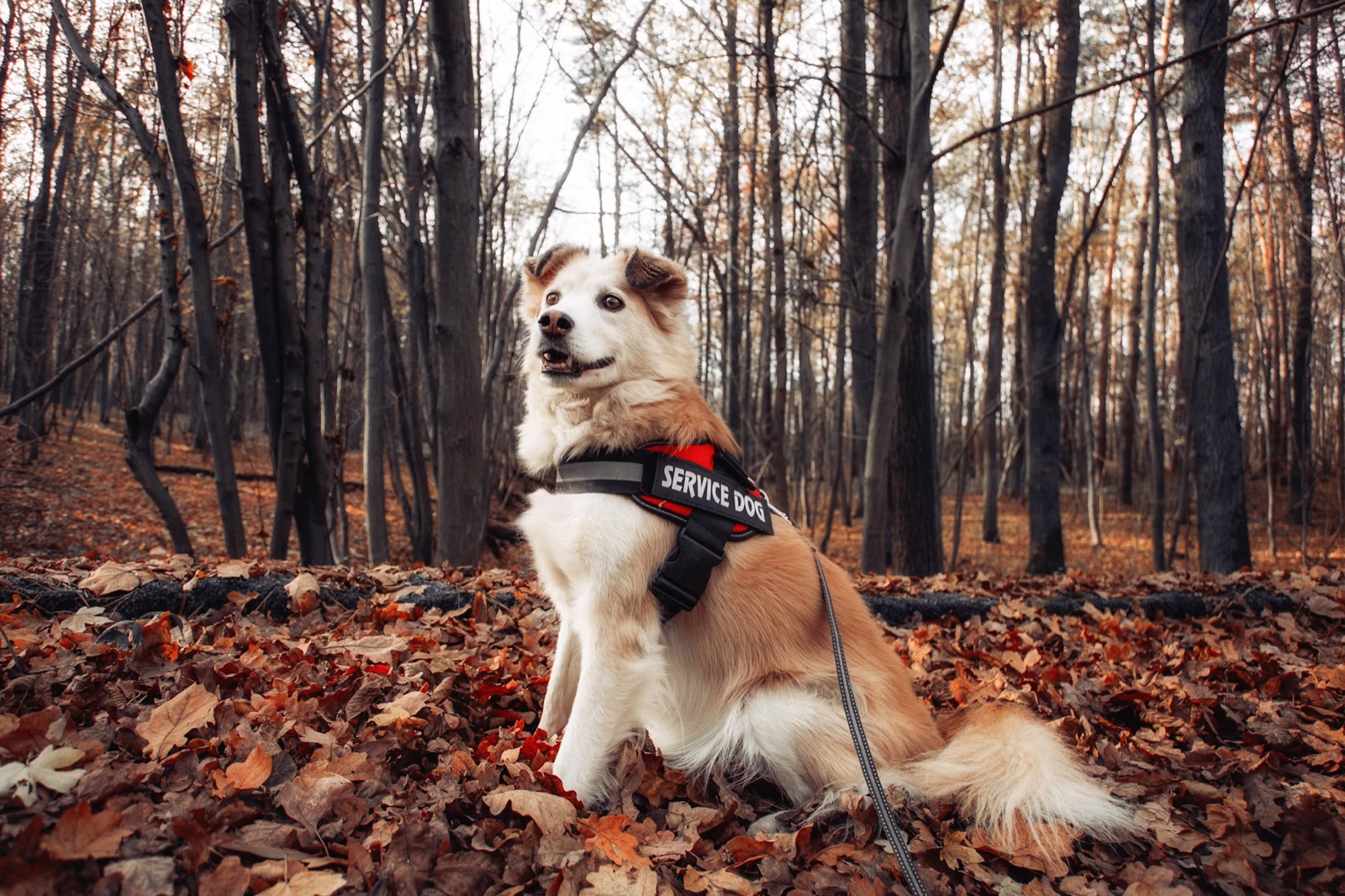
A service dog sitting attentively on lead in a wooded park.
The programs

Four stages. You can start at any of them.

Most handlers work through all four over eighteen months to two years. Some only need one piece.

Stage one

Candidate Evaluation

A two-hour assessment of the dog you have — or the dog you are considering. I look at startle recovery, sound sensitivity, environmental confidence, handler focus, body handling tolerance, and whether the dog actively seeks out novelty or avoids it.

  • Structured temperament testing in three environments
  • A written report with a clear go, wait, or no
  • If the answer is no, an honest conversation about what comes next

Start here. It is the single most useful thing you can do.

Stage two

Foundation Training

Before any task work, the dog needs to be genuinely neutral about the world. This is the unglamorous stage that decides whether the dog makes it.

  • Engagement and handler focus under distraction
  • Loose-lead walking that survives a busy sidewalk
  • Duration settles — under tables, beside wheelchairs, in waiting rooms
  • Neutrality to dogs, children, carts, and food on the floor
  • Toileting on cue, which matters more than anyone expects
Stage three

Task Training

The legally defining part: specific trained behaviors that mitigate your disability. We build these to your needs, not from a catalog.

  • Mobility — retrieves, door and button work, bracing on a suitable frame, carrying
  • Medical alert & response — scent-based alerts, fetching medication or a phone, get-help behaviors
  • Psychiatric — interruption of repetitive behavior, deep pressure, grounding, room checks, blocking and covering
  • Autism support — tethering, interruption, locating a handler, sensory grounding
  • Hearing — alerting to alarms, doorbells, name calls, and timers

Bracing work is only trained on dogs whose size, structure, and joint health support it, with veterinary sign-off.

Stage four

Public Access Preparation

Everything gets proofed in the places you actually go — grocery stores, medical offices, restaurants, transit, elevators, crowds. Trained at home means nothing if it falls apart in a crowded grocery store on a Saturday.

  • Graduated exposure across a wide range of Valley environments
  • Rehearsal of the awkward moments — being petted at, blocked, or questioned
  • Coaching on what businesses may legally ask you, and what they may not
  • A Public Access Test evaluation against the recognized industry standard
Know your rights

The law, without the marketing.

I would rather you hear this from me than buy a certificate from someone else. This is general information about how access rules work in the United States, not legal advice — for a specific dispute, talk to a disability rights attorney.

There is no official registry

No federal certification, ID card, license, or registry exists for service dogs. Any site charging you for one is selling a novelty.

Staff may ask two questions

Only whether the dog is required because of a disability, and what work or task it has been trained to perform. Not for documents, not for a demonstration, and not about your diagnosis.

Behavior can end access

A business may ask any dog to leave if it is out of control or not housebroken. This is the real standard, and it is why proofing matters.

Training is the requirement

The dog must be individually trained to do work or perform tasks. A dog whose only function is comfort is an emotional support animal, with different and narrower rights.

California adds protections

State law also protects handlers and makes misrepresenting a pet as a service dog an offense. Doing this properly is not just about etiquette.

Owner-training is your right

You may train your own dog, or have a trainer help you. You are not required to buy a finished dog from a program.

Realistic timelines

How long this actually takes.

Numbers I will stand behind, rather than the ones that close a sale.

Months 0–6

Evaluation and foundation. Socialization, neutrality, and basic skills. If the dog is going to wash out, you usually learn it here — which is the cheapest possible place to learn it.

Months 6–14

Task training runs alongside expanding public exposure. Skills get built at home, then moved outward one distraction level at a time.

Months 14–24

Full public access proofing, generalization, and the Public Access Test. Then maintenance, because a service dog is trained continuously for its whole working life.

A word on washouts: across the industry, a large share of candidate dogs — commonly reported as half or more, even in well-run breeding programs — never finish as service dogs. It is not failure. A washed-out candidate is very often an excellent pet, and I will help you make that transition kindly if we get there.

Start with an evaluation.

Tell me about your dog, your situation, and the tasks you need. If your dog is a candidate I will tell you. If it is not, I will tell you that too.

Request a consultation See board & train